You Merged the Companies. Nobody Merged the Work.
Share this article


Table of Contents

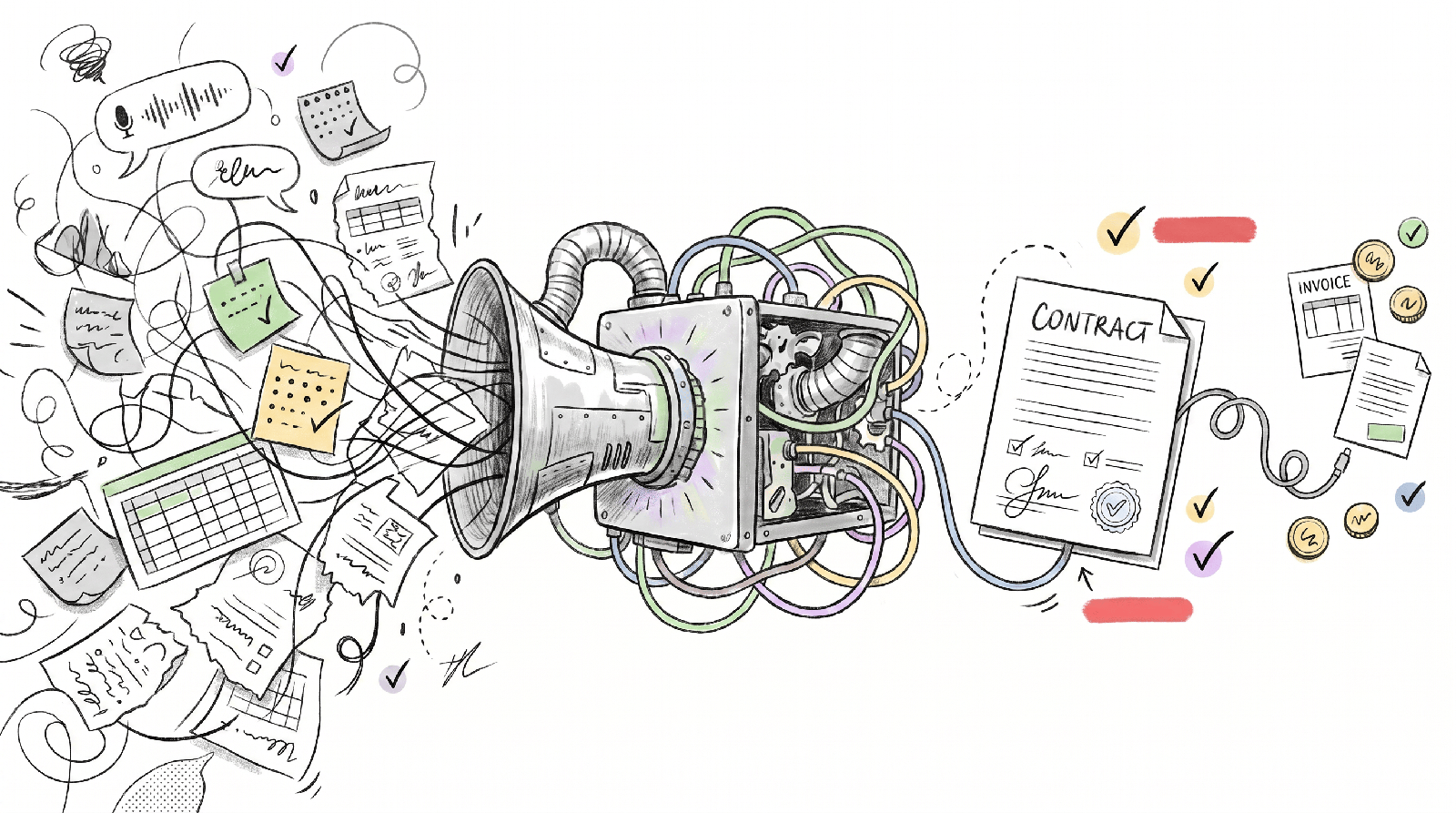
Every deal triggers a restructure. Most restructures are run blind. Here's the part of the merger nobody maps, and what happens when you finally do.
I keep thinking about how much reorganization is happening right now. Not in the abstract. Right now, this year. Holding companies absorbing each other. Private equity rolling up seven businesses into one and calling it a platform. AI mandates coming down from boards, forcing every function to restructure around tools half the team hasn't touched yet.
Gartner put a number on it: the average employee now goes through around ten planned enterprise changes a year. A decade ago it was two.
And I've noticed something about the people inside these companies. They're not change-resistant. Most of them have been through three reorgs in four years. They're fluent in change. What they've lost is the willingness to keep backing it. Gartner found that employee support for enterprise change collapsed from 74% to 43% in six years. I don't think that's fatigue with change itself. It's fatigue with being reorganized by people who can't see how the work actually happens.
The org chart says nothing about the work
Every round of restructuring, leadership gets a new org chart. The org chart says who reports to whom. It says nothing about how work moves.
That's the blind spot the whole integration playbook is built on, and the deal math shows it. Roughly 70% of mergers fail to deliver the value that justified them. Bain found only about a third of acquirers ever hit their synergy targets. The synergy isn't dying in the model. It's dying in the operation, in work nobody merged.
What the inside of a merger actually looks like
The deal closes. The press release goes out. The org chart ships on day one, because that's the thing you can ship on day one.
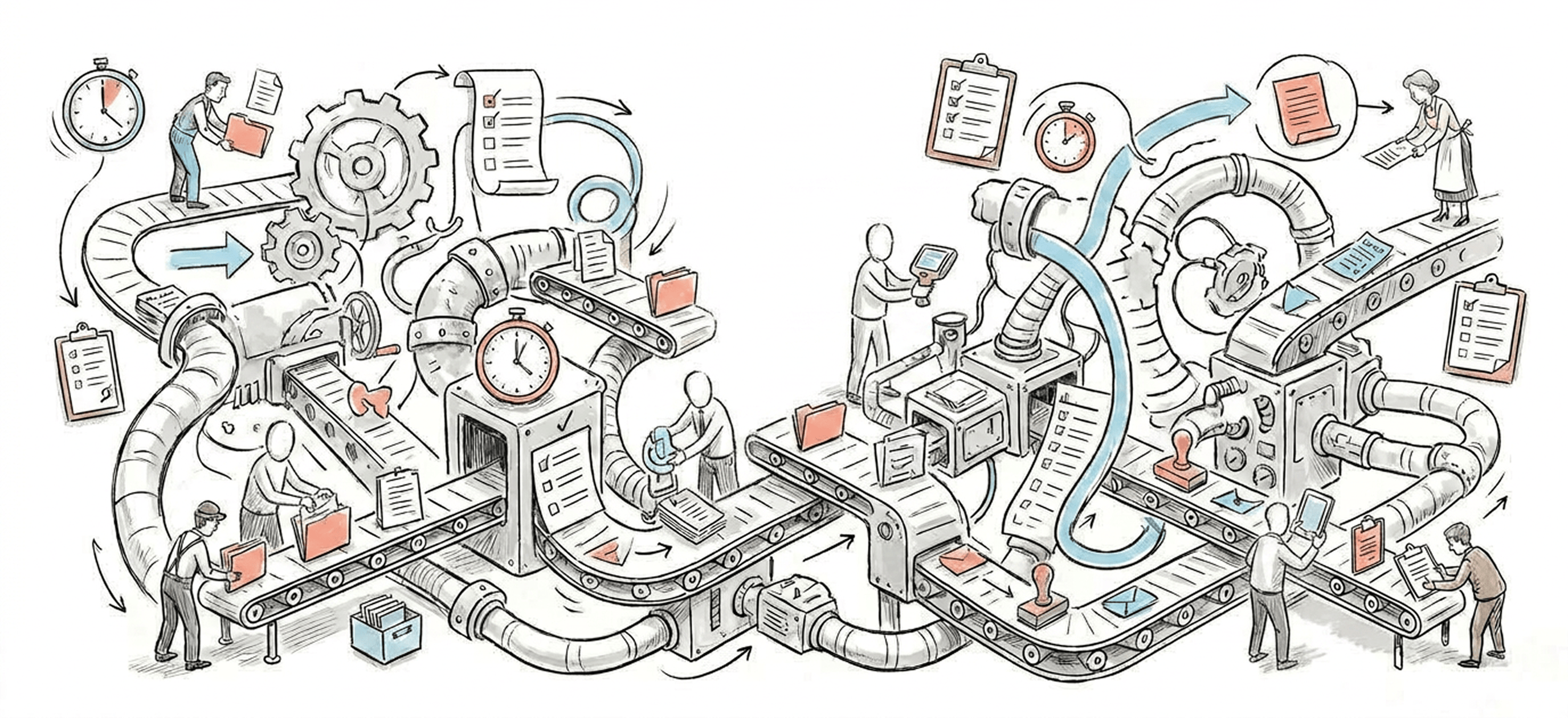
And then two companies' worth of work keep running side by side, doing the same jobs twice in different tools. Two intake processes. Two approval chains. Two versions of the weekly report, built by two teams, read by the same executives. Each team arrives certain the other one does it wrong. And somewhere in the middle sits one producer, manually rekeying everything between two systems connected by nothing but a shared inbox and her memory.
She's not in the deal model. But she is the integration.
When leadership finally tries to close that gap, they face the long way around: months of interviews, workshops jammed between day jobs, consultants building slides that are stale before the readout. So most don't. They redraw the chart again and hope the work sorts itself out underneath. It never does. The people absorb the difference, and every reorg costs a little more trust than the last one.
These decisions aren't hard because leaders are indecisive. They're hard because nobody can see the terrain. You cannot merge two operations you cannot see. You can only merge their org charts, and then wonder why nothing underneath changed.
Map the work first
There's a different way to do this, and we've now done it enough times to say it plainly: see both companies' work before you design anything.
This used to take months, which is why nobody did it. It now takes weeks. Ace Work runs AI interviews across both organizations at once, every team, every role, and produces a living map of how work actually happens in each company, in one comparable format.
We surveyed both sides of one media acquisition in the first two weeks after close. The map showed roughly 40% of the workflows were straight duplicates. Three tools doing the same job. Two systems connected by a shared inbox and one person rekeying everything between them.
What changes when everyone can see it
Here's the part that surprised me the first time and doesn't anymore: the moment both operations sat side by side on one map, the politics drained out of the room.
What had been a standoff, two teams defending two legacies, became a design exercise. Leadership did the job it was actually hired for. Picked the stronger intake. The faster review chain. One reporting layer. And wrote it down as the standard. Not a compromise between two histories. A decision.
Ninety days after close, the combined team ran one way, on purpose.
That's the difference between a reorg done to people and one designed in front of them. Same deal, same headcount pressure, same board. A completely different experience for the humans inside it, because the decisions were made against reality instead of against a chart.
The chart is the easy part
There's going to be more of this, not less. More consolidation, more restructuring, more companies rebuilt mid-flight. Operators don't get to opt out of the turmoil. But we do get to choose whether we run it blind.
The conviction we've built Ace around is simple: you shouldn't reorganize what you've never actually seen.
If there's a deal or a restructure on your calendar this year, map the work before you redraw the chart. The chart is the easy part. It always was.
Merging teams?
See what both companies' work looks like side by side. See the how Ace Work can help or book 30 minutes with us.
Related posts